The Stroke of Genius: How Calligraphy Can Sharpen Your Mind and Calm Your Spirit
Discover how the ancient art of calligraphy offers a unique, meditative workout for your brain, boosting memory, focus, and emotional well-being in your later years.
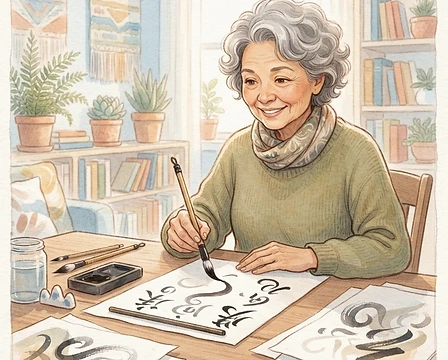
The Mindful Art of the Brush
As we navigate our fifties and beyond, we often look for ways to keep our minds as agile as they were in our younger years. While we often turn to crosswords or digital brain games, there is a timeless, elegant practice that offers a profound cognitive workout: calligraphy. Whether you are using a traditional brush or a simple fountain pen, the act of deliberate, artistic handwriting is far more than just a creative hobby. It is a sophisticated, mind-body exercise that engages multiple areas of the brain simultaneously, helping to preserve cognitive function and foster a sense of inner calm.
Research suggests that calligraphy—specifically the practice of focused, intentional handwriting—requires a unique blend of skills [4]. It is not merely about the final aesthetic result; it is about the process. When you sit down to form letters with care, you are engaging your visual perception, spatial awareness, and fine motor control [4, 9]. This combination of mental and physical effort creates a "cognitive load" that is excellent for keeping the brain resilient [1, 4].
A Workout for Your Neural Pathways
Why is calligraphy so effective for brain health? The secret lies in the integration of different cognitive domains. When you practice calligraphy, your brain must manage several tasks at once: you are visually encoding the shape of the letters, planning the spatial layout on the page, and executing precise motor movements with your hand [4, 5, 9]. This process activates the frontal motor cortex and relies on the basal ganglia and cerebellum to ensure smooth, controlled strokes [10].
Studies have shown that this type of focused handwriting training can lead to measurable improvements in working memory and attentional control [5]. By requiring you to maintain consistency in your stroke order, rhythm, and spacing, calligraphy acts as a form of "cognitive rehabilitation" [4, 5]. It forces the brain to slow down and pay attention to detail, which helps build new neural pathways—a process known as neuroplasticity [2]. Just as physical exercise strengthens your muscles, the mental discipline required for calligraphy keeps your mind strong and adaptable [2].
Cultivating Calm Through Concentration
Beyond the cognitive benefits, calligraphy is a powerful tool for emotional regulation. In our fast-paced world, the ability to pause and focus on a single, repetitive task is a rare gift. The practice encourages a state of mindfulness, where you become fully present in the movement of the pen [1, 10]. This focus can help lower stress levels, which is vital for long-term brain health, as chronic stress can be detrimental to memory and cognitive function [1, 5].
However, it is important to approach this practice with the right mindset. Research indicates that the benefits are most potent when you focus on the process rather than the perfection of the output [1]. If you find yourself worrying about whether your handwriting looks "good enough," you may inadvertently introduce stress, which can counteract the calming effects [1]. Instead, view your practice as a personal journey of discovery. Whether you are tracing letters or practicing cursive, the goal is to enjoy the rhythm of the pen and the quiet satisfaction of creating something with your own hands.
Getting Started with Your Own Practice
You do not need expensive equipment or years of training to begin. Start by setting aside just 15 to 20 minutes a few times a week. Find a quiet space where you can sit comfortably, and choose a style of writing that appeals to you—perhaps classic cursive, italic script, or even simple, bold lettering. The key is consistency. By making this a regular part of your routine, you provide your brain with a reliable, stimulating challenge that keeps it engaged and vibrant [8].
If you are new to this, consider using a guide or a simple workbook to help you practice specific shapes and strokes. Focus on the sensation of the pen against the paper and the way your hand moves to create each character. Over time, you may find that this practice not only improves your handwriting but also leaves you feeling more centered, focused, and mentally refreshed.
A Note on Your Health
This article is intended for general information purposes only and is not a substitute for professional medical advice, diagnosis, or treatment. Always seek the advice of your physician or other qualified health provider with any questions you may have regarding a medical condition or cognitive concerns.
Keep Your Mind Vibrant
Ready to put your brain to the test? At Mentally Fresh, we believe that keeping your mind sharp should be an enjoyable, daily habit. Join our community of lifelong learners and challenge yourself with our curated collection of memory games, puzzles, and cognitive exercises designed specifically for adults 50 and older. Visit /register today to sign up and start your journey toward a more resilient, vibrant mind.
Keep your mind sharp every day
Daily games and nostalgic stories, made for adults 50+.